

Board Certified Orthopedic Clinical Specialist
Foot and Ankle Specialist
If you are like most people with Plantar Fasciitis you have experienced many of the same challenges. You suffer with heel pain or other pain on the bottom of your feet, your life is upended, and you have tried just about everything to cure Plantar Fasciitis but nothing seems to work.
Seriously, you have gone to Podiatrists only to be offered cortisone shots, a couple general stretches, shoe inserts, and perhaps some custom orthotics. You may have gone to online forums and groups in search of the best ways to heal Plantar Fasciitis and the majority of what you find is people suffering and grasping for relief just like you with little to no success.
When people are searching for methods to cure Plantar Fasciitis they are instinctively attracted to stretching or strengthening exercises, but unfortunately poor flexibility and weakness are only part of the bigger problem and quite often these are attempted at the wrong time and performed incorrectly.
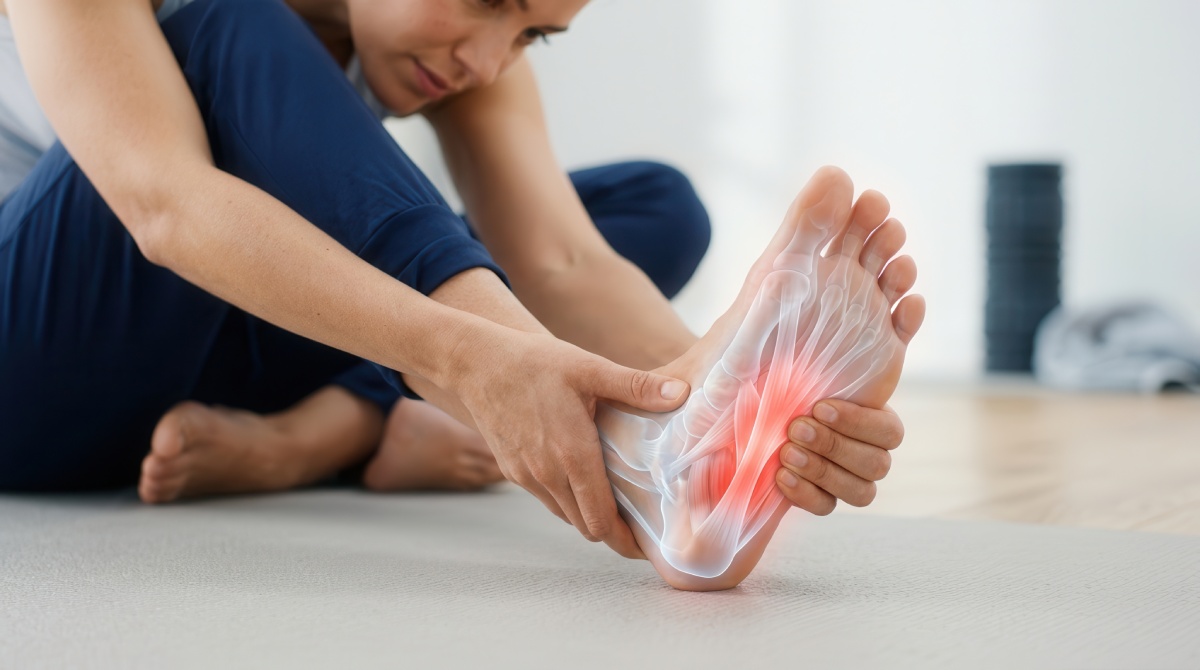
It is very helpful and important for you to understand what Plantar Fasciitis is and how it actually progresses to the more debilitating and relentless condition referred to as Plantar Fasciopathy. You see, The Plantar Fascia is a strong band of tissue that spans the entire bottom of your foot and has several different attachments and is interwoven with other ligamentous and tendinous structures. It is not a sheet of fascia all on its own and it actually interacts with many other tissues and joints to help you absorb shock and load, stabilize your arch, and propel you into whatever direction you choose. In essence, you couldn’t walk or run with any good functional capacity without it.
So, loading the Plantar Fascia and recovering from the effects of that loading is normal. It is when it is overloaded and not allowed to recover properly that it becomes damaged and inflamed. There are many reasons why your Plantar Fascia may be overloaded and these reasons are critical to identify in order to heal plantar fasciitis or even cure plantar fasciitis.
In the beginning, you may sustain some micro tears and inflammation in your Plantar Fascia. This is normal. However, if you continue to load and over stress damaged and inflamed tissues and fail to allow for normal healing, the tissues begin to breakdown and the healing process becomes inhibited and even abnormal. Experiencing heel pain or Plantar Fascia pain for a couple weeks is considered Plantar Fasciitis. If it persists for a couple months and beyond you begin to develop Plantar Fasciopathy which basically becomes a degenerative condition where the structure of the Plantar Fascia transforms into non-healing, painful, and dysfunctional tissue. This is when it becomes seemingly impossible to get rid of the pain.
So, why do so many people continue to suffer for months and sometimes years?
Because most of the treatments prescribed or recommended fail to accomplish the most critical 1st step; Heal the degenerative Plantar Fascia tissue.
Cortisone shots don’t heal the degenerative tissues, in fact, research suggests that chronic use of cortisone shots can accelerate the deterioration of the already degraded tissues. Orthotics can temporarily unload the tissues but they do absolutely nothing to cure Plantar Fasciitis or Plantar Fasciopathy. Stretching exercises when performed at the wrong time or at the wrong intensity can not only hamper recovery but can make the condition worse. Strengthening exercises done prematurely can overload tissues which can cause more pain, inflammation, and lack of healing. Rolling the bottom of the foot on a tennis ball or ice offers no healing benefit whatsoever. Trying different shoes and inserts can help but also do not heal the underlying degenerative tissue. Medications simply mask the pain and can reduce inflammation but do zero to fix the problem. Massage feels good but won’t actually heal the tissue. Surgery can actually weaken arch stability and support and invite new scar tissue and adhesion formation which can compromise long term benefit. (Cutting degenerative tissue doesn’t make it less degenerative)
Ok, then what WILL heal Plantar Fasciitis or cure Plantar Fasciitis?
The very first two steps for successful Plantar Fasciitis treatment are healing the tissue and protecting the tissue. 1.) Softwave, Extracorporeal Shockwave Therapy is the most effective way to signal your body’s own mechanisms to heal again. By recruiting your own stem cells, building new capillaries, and promoting natural growth factors at the cellular level, Shockwave Therapy is exactly what is needed prior to all the other necessary components to heal plantar fasciitis for the long term. 2.) Protection means creating a healing environment so that for a period of at least 3-4 weeks, excessive load to the plantar fascia is avoided. This can be accomplished by wearing very comfortable and supportive footwear and by reducing the amount of time and distance on your feet while the soft tissue healing process is underway.
Another critical component that needs to be conducted early is a thorough neuro-musculoskeletal examination by a foot and ankle specialist to determine any/all contributing factors so that they can be targeted in the overall healing strategy. Excessive body weight, malalignment, weakness, abnormal walking or running patterns, flexibility or mobility issues, overuse, improper footwear, and lack of sufficient recovery are all examples of factors that can contribute to Plantar Fasciitis or Plantar Fasciopathy.
Stretching and strengthening are often key components for successful Plantar Fasciitis treatment but timing, volume, and intensity are critically important and should be directed by a skilled professional. Finding random exercises on the internet is not recommended because they are not personalized and could hurt more than they can help.
The key with strengthening is to strengthen ALL of the muscles and tendons that collectively contribute to the stability of the arches of your feet thereby reducing tension on the Plantar Fascia. The key with stretching is to ensure optimal flexibility and joint mobility so that abnormal biomechanical loading can be avoided.
Eventually, once the tissues are healing and there is a sufficient amount of strength, stability, and controlled mobility it is then important to choose footwear that allows our feet and ankles to function the way they are supposed to.
In summary, what starts out as Plantar Fasciitis becomes a degenerative tissue condition known as Plantar Fasciopathy. It is best practice to catch it early and back off and let your Plantar Fascia and other structures recover. If you have been dealing with Plantar Fasciitis pain for a couple of months and beyond it is critical to understand that all the treatments you have tried have very likely failed to heal the degenerative tissue. Unless you heal the tissue, Plantar Fasciitis can turn into a lifetime of foot pain and lead to consequences of the reduced physical activity it causes. Remember to heal and protect first. Strengthening and stretching too early can hinder the healing process. Although they are important components of great Plantar Fasciitis treatment, doing them at the right time and at the right intensity is the key!
Frequently Asked Questions:
What causes plantar fasciitis and chronic heel pain?
Overloaded tissue in the absence of adequate recovery. The Plantar Fascia can be exposed to forces beyond its capacity for many different reasons but when it is not given the proper recovery time it can persist for several months to several years.
How long does plantar fasciitis take to heal?
If it is treated correctly it can take 6-8 weeks. If multiple different treatments are attempted without healing the tissue, it can take months or years.
Can plantar fasciitis be cured without shots or surgery?
Absolutely, in fact, Cortisone shots and surgery do nothing to actually heal or cure the underlying problem.
What are the best stretches and exercises for plantar fasciitis?
This depends on the underlying contributing factors for each individual. The best stretches and exercises on the internet may not be the best exercises for you.
Does shockwave therapy work for plantar fasciitis heel pain?
Yes, in fact it is one of the most advanced and non-invasive soft tissue healing technologies on earth. Softwave, in particular, is the most elite brand available in my experience. Not all “Shockwave Devices” are created equal.