

What is a Bunion and How Does it Form on the Foot?
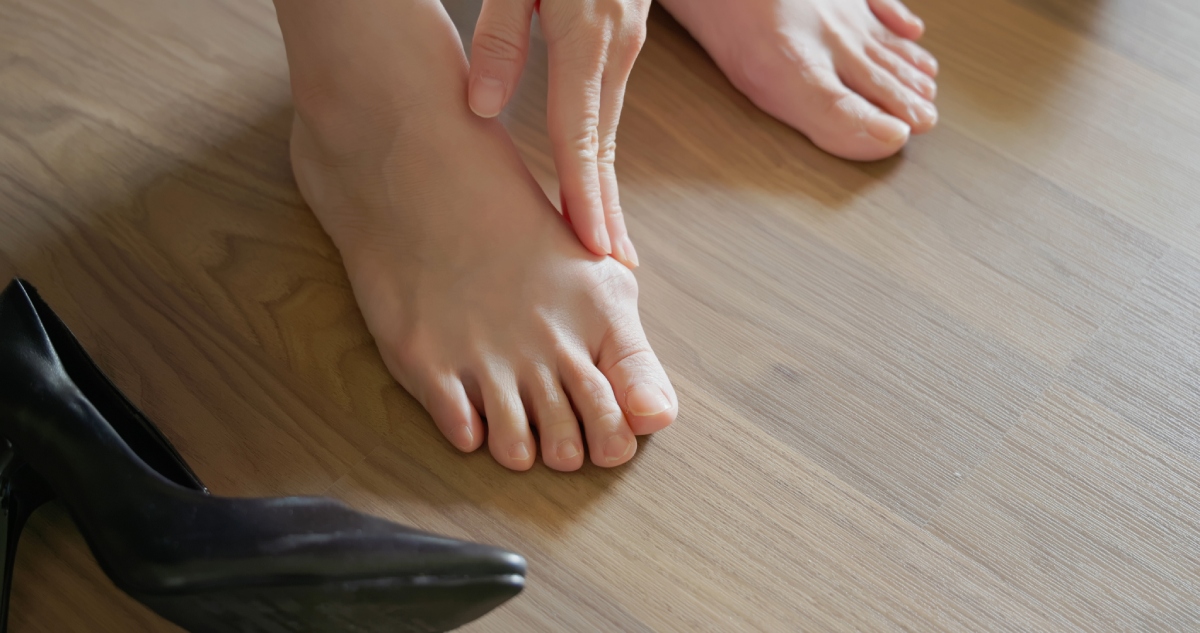
That big bump protruding on the outer surface of your Big Toe joint is what is referred to as a Bunion. Many times people walk around with a pair of Bunions as they often appear on both feet. At quick glance, it looks as though we could just go in and shave or cut that bone to get rid of that nasty angle but it isn’t quite that simple.
Bunions tell a much bigger story that just a bump appearing on the outside of our Big Toes. Bunions typically form as the result of multiple factors such as history of tapered footwear usage, instability in a couple of joints further up the foot, muscle weakness and inhibition, metatarsal bone rotation, excessive body weight, and biomechanical load abnormalities to name a few. This is why if you have a Bunion or two Bunions, it is important to consult an expert as early as possible because there is a lot to unpack!
And I don’t mean a provider that will just administer cortisone shots, medications, orthotics, and potentially offer a surgical procedure. Bunion management and the prevention of the progression of the deformity involves so much more than that and if you want to avoid a surgical procedure it is critical to get care as early as possible.
What if your Bunions don’t hurt?
Well, that is great and it may keep you off the surgery table, but don’t be fooled. Mismanagement of Bunions can lead to numerous complications that most people aren’t even thinking about. You see that drastic angle forming between your 1st Metatarsal bone and your Big Toe or Hallux can wreak havoc on your other 4 toes. Due to inefficient loading through your Big Toe, people with Bunions often experience increased load in their 2nd and 3rd toe joint, magnified compression of the digital nerves between their Metatarsal bones, and deterioration of ligamentous framework under the toes known as the Plantar Plate.
Walking on and through a Bunion without modification can lead to accelerated Big Toe joint degenerative changes which can eventually bring significant pain to a previously pain free Bunion. Progressive weakness left untreated can lead to wandering toes and hammer toe formation. Excessive “crowding” of your Big Toe in footwear can lead to the development of a Morton’s Neuroma between the lesser toes. Abnormal loading patterns can lead to balance issues and compensation development throughout the remainder of the foot, ankle, lower leg, knee, hip, and even your spine.
Early Signs and Symptoms of a Developing Bunion
Well, it all typically starts with a slight tilting or angling in of the Big Toe toward the other toes. Some people can begin to feel some pain in the area where the Bunion eventually presents as that big bump or protrusion. The pain is from ligamentous tissue or a tendon being overstretched and in the early stages may present only when wearing shoes that cause rubbing and friction on that area. If someone is really paying attention, the excessive Big Toe movement into the other toes can be seen while weight bearing and walking. Lastly, if Bunions are “in the family” it is good practice to get ahead of it and begin a skilled Bunion prevention program early. It can take as little as 5 minutes a day but should be instructed and directed by a qualified foot specialist.
How to Relieve a Painful Bunion and Big Toe pain without Surgery
First of all, I have seen many patients post surgically and the majority of them either had more pain and additional symptoms and complications following the surgery or experienced their Bunion returning at some point after the surgery. In fact, a recent post-surgical case in which the girl had a pain free Bunion prior to surgery and ended up with excessive pain, dysfunction, and even neurological involvement after the procedure. It is always recommended to exhaust all conservative options and approaches prior to electing a surgical procedure.
Step 1: Stop wearing tight shoes or sneakers with a tapered toe box!
Step 2: Seek the help of a professional who specializes in foot conditions and can teach you specific muscles that need to be activated and strengthened and provide you with proper spacing and loading strategies including optimal footwear prescription.
Step 3: Bonus if you can find a Softwave brand Shockwave Therapy provider to help relieve pain and inflammation in angry and overstretched soft tissues and provide healing to all of the structures around your Big Toe.
One of the most important clarifications you need to be aware of is the use of “Bunion Correctors.” Let’s get something straight, (no pun intended) gadgets don’t “Correct” a Bunion, even the fancy ones that you dial until the toe is straight. It doesn’t change the Bunion deformity. However, less bulky “Bunion Correctors” can be worn inside a wide toe box shoe or barefoot for the purpose of “aligning” your Big Toe joint so that when you walk you are loading through an aligned joint vs. an angled joint. This practice can extend the life of that Big Toe joint by at least allowing you to load through the whole medial column of your foot a little more efficiently with less “joint grinding” that is associated with loading forces through an angled deformity.
All of these steps will not help you shrink Bunions, but they can definitely help slow and even prevent the progression of Bunion deformities.
In Summary
Bunions come in all shapes and sizes and present with many different levels of pain and functional challenges but there is much more hope for conservative management than one might believe. You just have to find the experts who know how to implement a comprehensive, all-encompassing approach. Cortisone shots and surgical procedures are not the best recommendations in my expert opinion. It really is important for you to understand that there are several factors involved in the formation and progression of a Bunion.
Here is your takeaway; Take care of your Bunions at the earliest phase of development as possible, avoid cortisone and surgery unless your ability to function is so compromised that your quality of life is non-existent, and seek out an expert foot specialist who can offer a comprehensive plan and not just a 5-minute visit.
Frequently Asked Questions:
What causes a Bunion to form on the big toe joint?
There can be multiple factors involved including chronic use of narrow or tapered footwear, weakness, bony rotation, foot joint instability, biomechanical load abnormalities, heredity, and many more contributing components.
What are the early signs and symptoms of a Bunion?
Your big toe begins tends to angle inward toward your other toes and pain on the outside or even the top of the joint.
Can Bunion and big toe pain be relieved without surgery?
Yes !!!
Do Bunions get worse over time if left untreated?
Yes they do and it can lead to surgical procedures that could have been prevented!
How does Softwave – Shockwave help with Bunion pain?
It cuts inflammation at the cellular level and helps to heal soft tissues in and around your big toe joints